Knowing when to drink a bottle of wine
Most bottles get opened too late. Here is how to work out when to drink a bottle of wine without being a sommelier, and what to do when nobody knows.
Food and drink
Kav
Kav is a wine cellar app: photograph the label, it recognises the bottle, files it on a shelf and tells you which one is ready to drink tonight.
Free: 30 bottles in the cellar, 30 label scans and 30 studio photos for life, plus food pairing, search, multiple cellars and statistics with no limit. Premium lifts the caps and opens market prices and critic scores, at 59.99 € a year or 8.99 € a month.
185,319 wines
the LWIN index shipped inside the app, searchable with no connection
0 invented
a missing market price or score stays empty, it is never guessed
47 dishes
food pairing, computed on the device and free for everyone
01 Where this started
A cellar, even a small one, raises two questions a notebook does not answer. What exactly do I have, and what should I be opening now? The second is the expensive one: a bottle drunk five years past its window is not an expensive bottle, it is a wasted one.
A spreadsheet works up to about thirty bottles. Past that nobody keeps it current, because entering a wine by hand means knowing its appellation, its vintage and its ageing window, and none of those are in front of you at the moment you are putting bottles away.
Kav starts from the one thing you always have to hand: the label. Photograph it, and the app recognises the bottle and fills in its record.
A bottle drunk five years too late is not an expensive bottle. It is a wasted one.
02 Adding a bottle
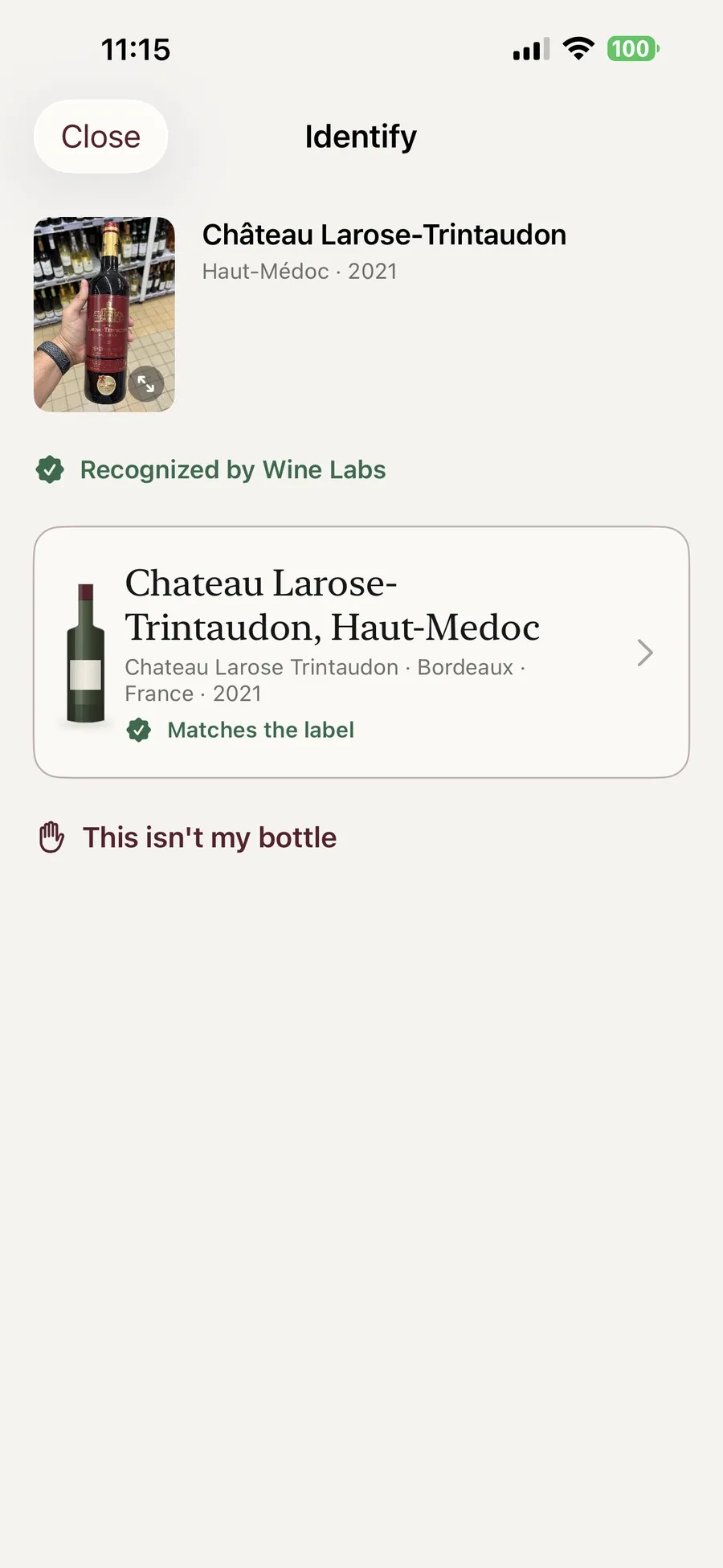
The label text is read on the device, then matched against the catalogue. Kav shows what it recognised, with its reservations when it is unsure, and waits for you to agree. Nothing enters the cellar without confirmation.
In the screenshot, the label came back recognised and the green line reads matches the label. Right below it sits a link that matters just as much: this isn't my bottle. Recognition you cannot say no to is recognition that gets things wrong quietly.
With no signal, the photo joins a queue and gets read on its own once the connection returns. A capture stack also lets you photograph ten bottles in a row and sort them afterwards, which is the right move when you are unpacking a case.
03 The cellar
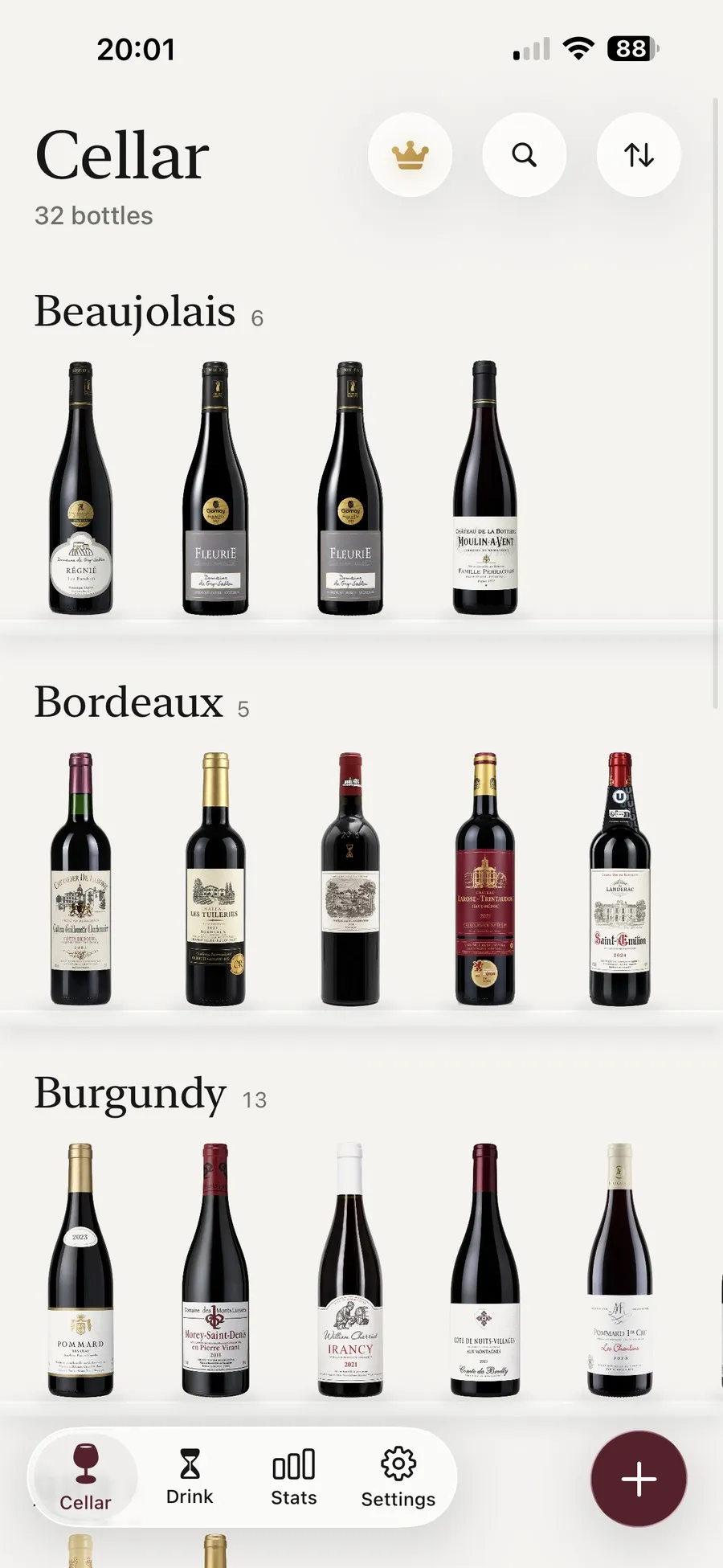
Bottles stand on glass shelves, one row per region, colour, country or location. In the screenshot, six Beaujolais, five Bordeaux, thirteen Burgundy, and the state of the cellar reads at a glance without reading a single line.
A long press lifts a bottle: you put it back wherever you want, in its row or in another bay. It is filing by hand, with the same logic as a real cellar.
Several cellars coexist, the flat, the country house, a storage unit, and two levels of location, bays and bins, let you find a bottle without hunting for it. Six bottles of the same wine form a lot, which splits when two go to the country.
Until a bottle has its own photograph, its silhouette carries the colour of its wine: green glass and a wine-red capsule for a red, pale glass and a gold foil for a white. Without that, a row of reds and a row of whites would be the same grey.
04 Tonight
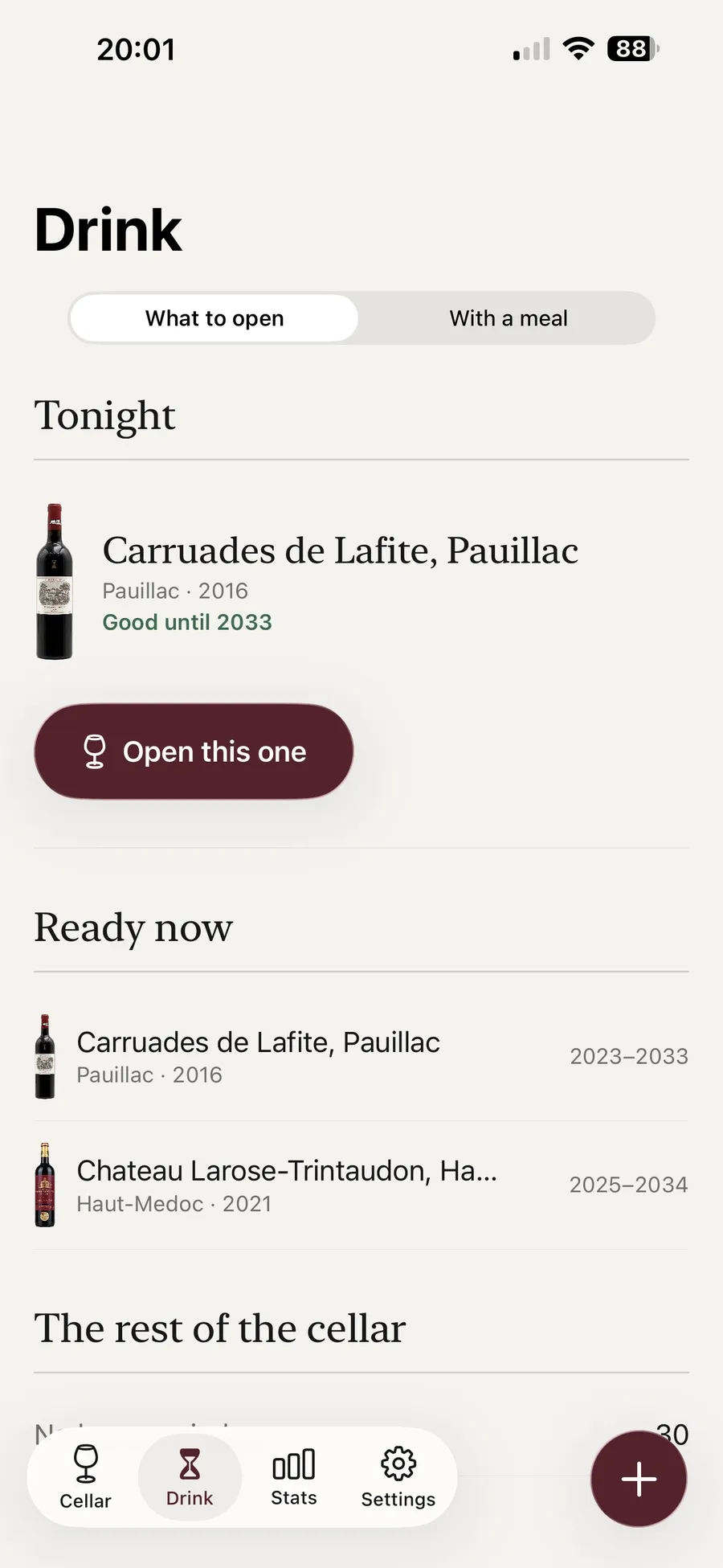
The Drink tab suggests one bottle for tonight, then lists what is ready now with its drinking window. In the screenshot, a 2016 Pauillac good until 2033, and a button to open it.
Opening a bottle removes it from stock and keeps the date and the note. The most recent impression moves to the top of the record, which is the only way to know whether the next one is worth waiting for.
On the first of each month at 10, one notification, one for the whole cellar, and only if something has changed. The rest of the time the app says nothing. That is deliberate: a cellar app that notifies weekly gets muted within a month.
05 At the table
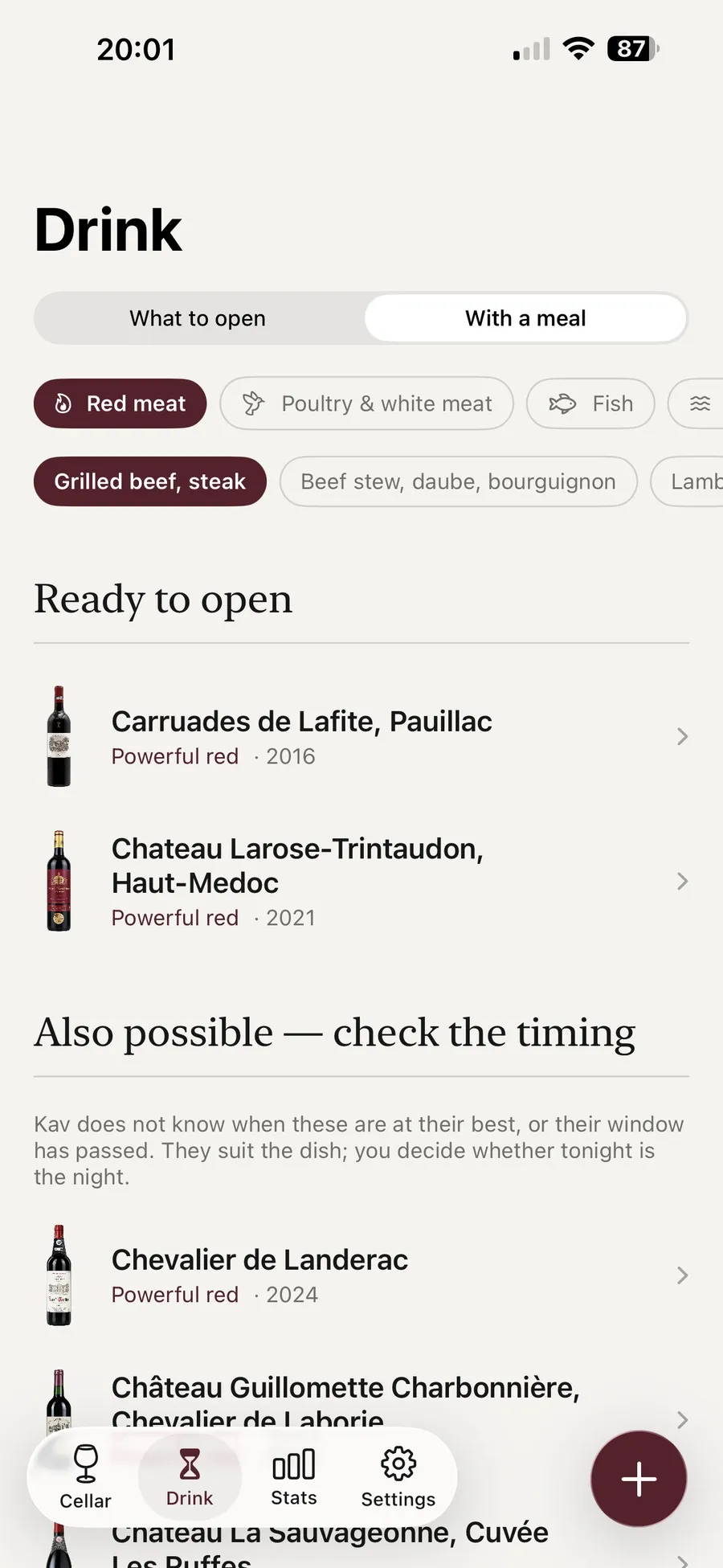
The second tab starts from the meal rather than the cellar. Nine categories, forty-seven dishes, from grilled beef to fish in sauce, and Kav pulls out what suits, from bottles actually in your cellar.
The detail I care about sits lower down the screen. Under the ready bottles, a second list: also possible, check the timing, with its own line of explanation. Kav does not know their peak, they suit the dish, you decide.
A pairing engine that merged the two lists would look cleverer. Mostly it would be impossible to contradict, and you would never know which of its recommendations rested on real information.
All of that runs locally. No network call, so no cost, so no reason to reserve it for subscribers.
Separating what you know from what you assume costs one column. Not doing it costs trust.
06 What it is worth
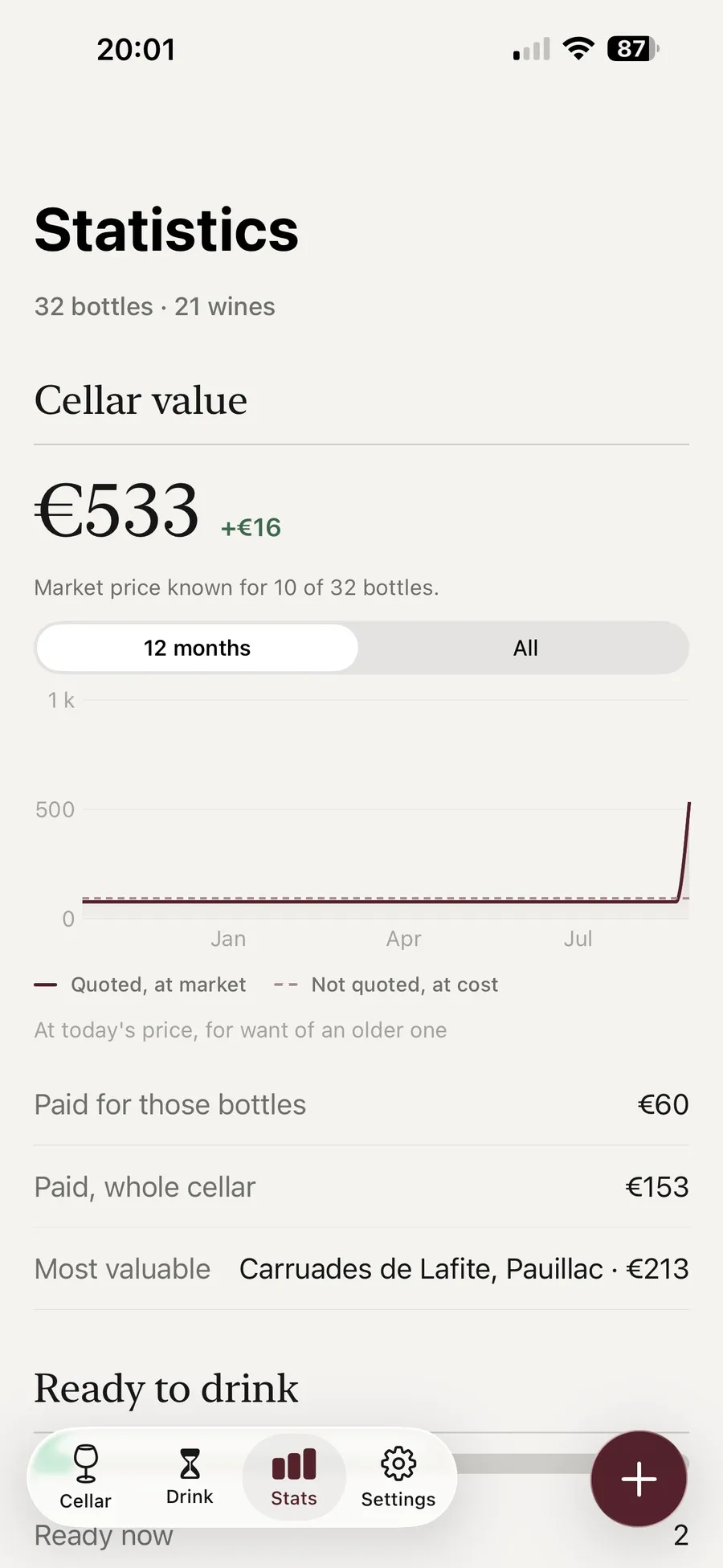
533 euros. And right underneath, the sentence most apps leave out: market price known for 10 bottles out of 32.
It is the same information shown twice, the value and its coverage, and the second changes everything. A total with no denominator suggests the whole cellar has been valued, when two thirds of it has not.
The curve draws two lines for the same reason: quoted bottles at market, unquoted ones at what you paid. The statistics also give the split by colour, the region map, the most valuable bottle and the gain over what was paid.
07 The map
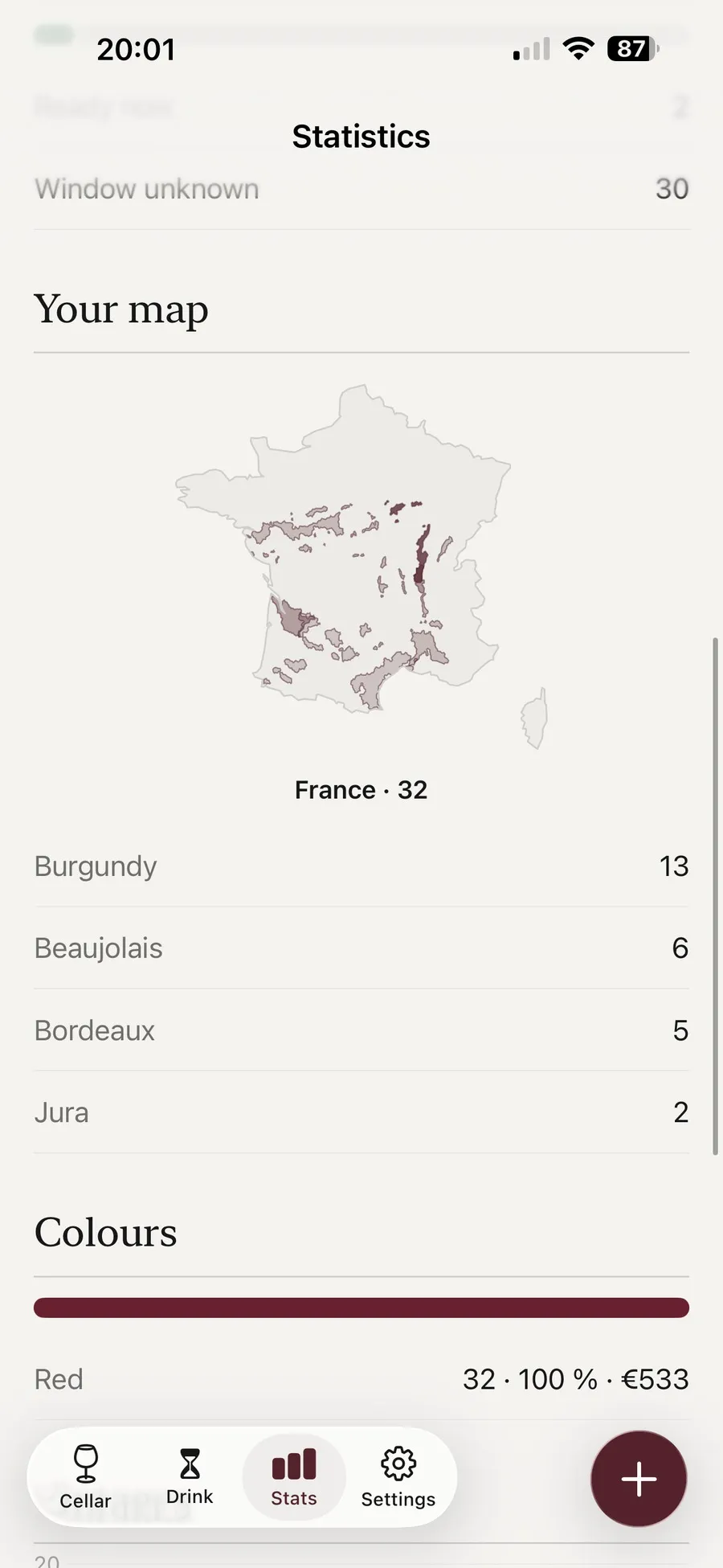
The map shades the regions your bottles came from, and the list counts them. Thirteen from Burgundy, six from Beaujolais, five from Bordeaux, two from the Jura.
It is the least useful screen and the one people look at most. It settles no dinner, and it says something true: a cellar is a portrait of its owner, and the map shows it before the owner has admitted it.
The interface is a warm monochrome and the background is never white. A single wine red marks everything you can act on; everywhere else, colour belongs to the wine. That is what keeps a screen legible with twenty-five bottles on it.
Producer, appellation, grapes and drinking window arrive on their own. You confirm, or you say it is not your bottle.
The LWIN index ships inside the app. Search, filing and pairing all work down in the cellar with no signal.
The first at 10, a single alert for the whole cellar, and only when a window has actually changed.
A missing price, a missing score, an unknown window stay empty. The screen says so rather than filling the gap.
This is the point I fought hardest over, and the one I am happiest with.
Kav’s index covers wines for keeping, the ones with a market, tracked vintages and critics who score them. A three-hectare grower’s cuvée, a co-operative bottle or a very local producer’s label often are not in it. Measured on nine real photographs from my own cellar, three references were in no database at all. That is not an edge case, it is a normal share of a French cellar.
Kav keeps the bottle anyway, with its photograph, your notes and your drinking window, and leaves the price and the score empty rather than inventing them. An incomplete record is honest. A record filled in at random is not, and it is worse than an empty one, because you cannot tell which of the two you are looking at.
The app says so in its settings, and the plan comparison repeats it on the two lines concerned. In other words before you pay, not after.
The line was not drawn by feel. It follows one rule: what costs me money is paid, what runs on your iPhone is free.
Market prices and critic scores call paid providers, so they sit in the subscription. Label recognition and studio photos cost money too, but the app gives a lifetime allowance of thirty of each, so you can judge it before reaching for a card.
Food pairing, search, filing, bays, multiple cellars and statistics run entirely on the device. They cost me nothing, so they stay open, including to someone who has no intention of ever paying.
And the day you stop, the cellar stays. Your bottles, your notes, your history. The subscription lifts caps, it does not hold the cellar hostage.
Kav is not published yet. The screenshots on this page come from the app as it runs on my iPhone, with my actual cellar in it: thirty-two bottles, twenty-two of which nobody knows a price for.
What is left is the display typeface, which is not yet embedded, and the subscriptions, which are waiting on an Apple contract without which they stay in incomplete metadata.
This page will be updated on release day.
With no account, nothing leaves the iPhone. With an account, the cellar is copied to a server in Paris, and label photographs go to providers to be read and retouched. The detail of that route, including the honest caveat about the storage addresses of those images, is in the Kav privacy policy.
One point is worth reading before you use it: a studio photo may join a catalogue shared between all users, so the same bottle does not have to be produced a hundred times over. Your original photo never goes there. The rules of the service, the caps and the legal notice are in the terms of use.
You photograph a bottle's label. Kav reads the text on the device, matches it against its catalogue, and proposes a record with the producer, appellation, grapes and drinking window. Once you confirm, the bottle goes onto a shelf sorted by region, colour or location, and the app then tells you which bottle is ready to drink.
Not to get started. The account exists so you can find your cellar again on a new phone. Sync is local-first: the device decides what it shows, the server follows.
Yes, and that was a starting condition, because a cellar is usually a basement. The index of 185,319 wines ships inside the app, the database is local, and search and food pairing run on the device. A photo taken with no signal is read on its own once the connection returns.
No, and the app says so plainly. Its index covers wines for keeping, the ones people put down and follow. A small grower's cuvée, a co-operative bottle or a very local label are often missing. Measured on nine real photographs, three references were in no database at all.
The bottle is kept anyway, with its photograph, your notes and your drinking window. The market price and the critic score stay empty rather than being invented. That is the rule the whole product rests on.
Thirty bottles in the cellar, thirty label scans and thirty studio photos for life, plus food pairing, search, bays and bins, multiple cellars and statistics with no limit at all. What runs on the device costs me nothing, so it stays open to everyone.
Unlimited bottles, 100 scans and 50 studio photos a month, market prices, critic scores, peak alerts and CSV import and export. It is planned at 59.99 € a year or 8.99 € a month. If you stop, your bottles, your notes and your history stay yours.
It is not on the App Store yet. This page will be updated on release day, with the download link in place of this sentence.
Coming soon
Kav is coming very soon.